
Diploma in ECG Technician Course in Siliguri
Build Practical Skills in Electrocardiography & Cardiac Diagnostic Support
Learn. Practise. Record ECGs with Confidence.
The Diploma in ECG Technician at Northern Allied Health Institute (NAHI), Siliguri, is a career-oriented allied-health programme focused on electrocardiography, patient preparation, ECG recording, equipment handling, basic cardiac rhythm awareness, infection prevention, professional communication and diagnostic support.
Clinical scope note: ECG technicians perform ECG procedures and provide accurate diagnostic recordings to qualified healthcare professionals; clinical diagnosis and medical interpretation remain the responsibility of qualified clinicians.
ECG Technician Course at a Glance
Course
Diploma in ECG Technician
Course Code
AHE074
Duration
1 Year (Job-Oriented)
Eligibility
10+2 / MP (Any Stream*)
Training Mode
Theory + Practical
Location
Siliguri, West Bengal
What is Diploma in ECG Technician?
Diploma in ECG Technician is an allied-health programme that introduces students to electrocardiography and the practical procedures involved in recording the electrical activity of the heart. Students learn patient preparation, ECG equipment operation, electrode placement, recording procedures, basic rhythm awareness, infection-control practices, documentation and professional communication.
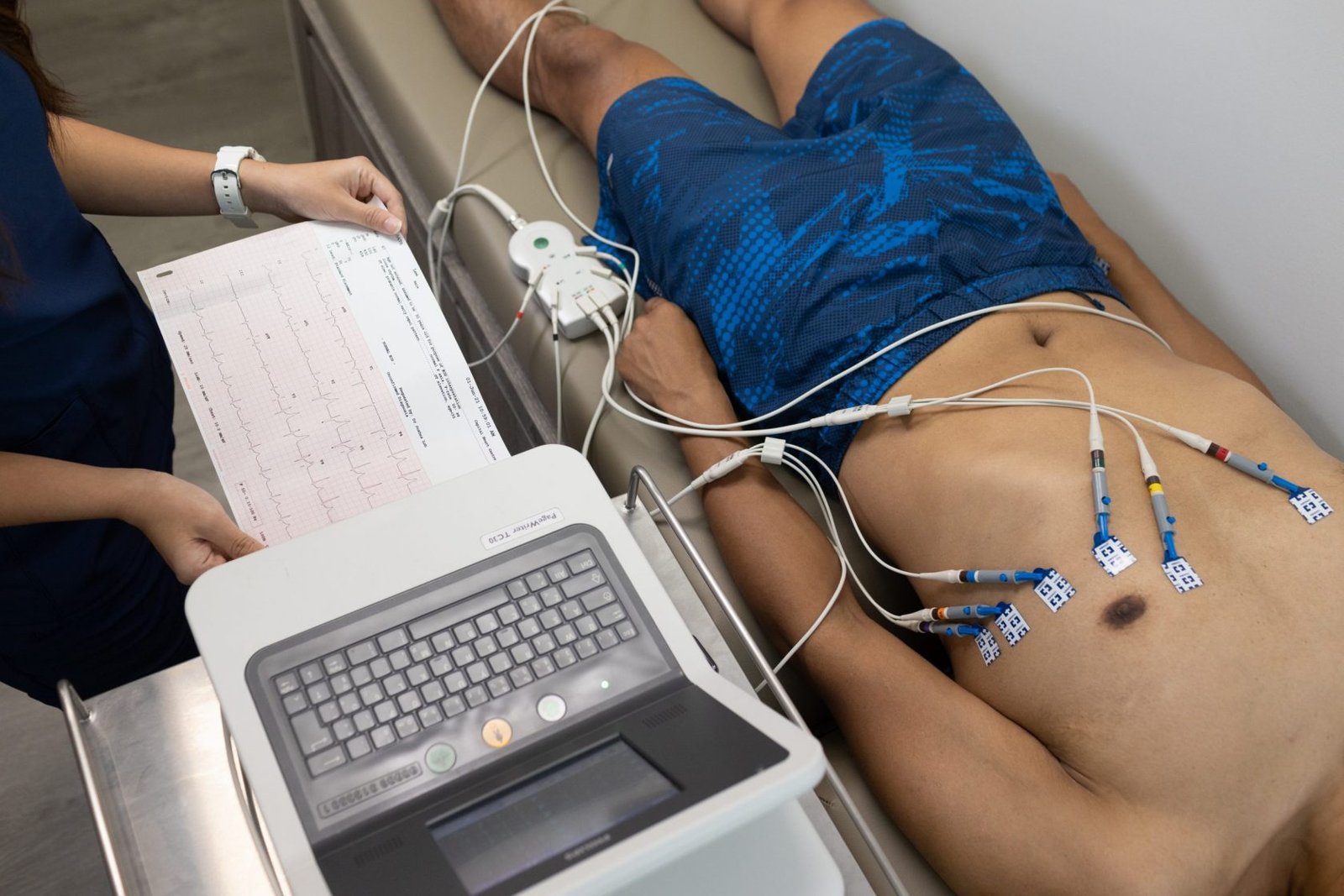
An ECG is a non-invasive diagnostic test that records the heart's electrical activity. ECG technicians support healthcare teams by obtaining accurate recordings that can be reviewed by qualified clinicians as part of patient assessment. Their role ensures that waveforms are clear, artefact-free, and correctly tagged with patient metadata for diagnostic reliability.
Why Study ECG Technician Course at NAHI in Siliguri?
Combine academic rigor with practical clinical exposure at the premier healthcare training institute in North Bengal.
Focused Cardiac Diagnostics
Dedicated curriculum centered on electrocardiography, cardiac rhythm recognition, and lead mechanics.
Hands-on ECG Machine Training
Extensive practical training on modern 12-lead multichannel ECG machines and patient simulation monitors.
Faculty-Led Mentoring
Learn from experienced educators, cardiotechnologists, and clinical professionals in small interactive batches.
Hospital Clinical Exposure
Supervised observational rotations and real clinical case discussions in regional healthcare facilities.
Infection Control & Safety
Master hospital infection prevention, lead sanitization, personal protective equipment, and safe patient handling.
Strategic Siliguri Campus
Located in Hakimpara near Siliguri College, easily accessible for students across North Bengal, Sikkim, Assam, and Bihar.
ECG Technician Eligibility
Applicants seeking admission to the Diploma in ECG Technician programme must meet the following academic conditions:
- Minimum Qualification: Higher Secondary (10+2) or equivalent examination from a recognized Council / Board. Candidates with Madhyamik / Class 10 qualification may also enquire with the admission office for foundation stream eligibility.
- Eligible Streams: Science (with Biology/Physics/Chemistry) is preferred; candidates from Arts and Commerce streams are also eligible for counselling and admission subject to institutional verification.
- Age Requirement: Minimum 17 years at the time of admission.
- Result Awaiting Candidates: Students appearing for final 10+2 exams may apply provisionally.
ECG Technician Course Duration
The Diploma in ECG Technician is structured as a concentrated 1-Year (Job-Oriented) programme. The programme structure is divided into intensive classroom lectures and repeated laboratory practical postings:
Academic & Practical Training Breakdown:
Academic Period: Theoretical foundations covering cardiac anatomy, electrocardiography principles, lead systems, computer fundamentals, and patient communication.
Laboratory & Equipment Postings: Extensive hands-on sessions in electrode application, calibration, speed selection, artefact recognition, and patient handling.
*Note: Students seeking advanced 2-year hospital-wide critical care and monitoring diplomas may also explore our Diploma in Critical Care Management (DCCM).
ECG Technician Course Fees
Course fees at NAHI are designed to remain accessible and affordable for students across North Bengal and neighbouring regions. Fee components include:
- 💳 Admission / Enrolment Fee
- 📝 Registration Charges
- 🎓 Tuition Fees (Installments)
- 🧪 Practical & Lab Charges
- 📚 Learning Resources
- 🏥 Clinical Training Charges
ECG Technician Admission Process
- 1 Explore the Programme: Review the ECG curriculum, career pathways, and academic structure.
- 2 Submit Application / Enquiry: Fill out the online application form or visit our Siliguri campus.
- 3 Document Verification: Submit 10th & 12th certificates, mark sheets, Aadhaar card, and photos.
- 4 Academic Counselling: Discuss batch timings, practical sessions, and clinical exposure options.
- 5 Confirm Admission: Complete the prescribed registration formalities to secure your seat.
ECG Technician Course Syllabus
The curriculum balances theoretical knowledge in cardiology and medical fundamentals with extensive practical laboratory training.
Course Subjects
| Subject Code | Subject Title |
|---|---|
| AHE074-01 | Communicative English and Computer Fundamentals |
| AHE074-02 | Electrocardiography (Electro Cardio Gram) |
| AHE074-02 | Practical – I (ECG Machine & Lead Placement) |
| AHE074-04 | Practical – II (Clinical Tracings & Recording Quality) |
Practical Training
Communicative English & IT Skills
Professional patient interaction, medical terminology, consent, clinical etiquette, and digital healthcare documentation.
Electrocardiography (ECG) Theory
Cardiac electrophysiology, heart chambers, conduction pathways, P-QRS-T waveform characteristics, and rhythm identification.
Hands-on Laboratory Postings
Skin preparation, gel application, 10-electrode / 12-lead placement, calibration adjustments, baseline drift correction, and tracing analysis.
ECG Practical & Equipment Training
Practical learning is the core of ECG technician education. Students become proficient in ECG machinery, electrode positioning, artefact reduction, and safe clinical operations under direct faculty supervision.
Understanding ECG Purpose
Principles of non-invasive cardiac electrical conduction recording.
Patient Identification & Preparation
Protocol verification, explaining procedure, positioning, and calming patient anxiety.
Correct Electrode Placement
Anatomical landmarking for 4 limb leads and 6 precordial chest leads (V1-V6).
Clear Diagnostic Recordings
Standardizing voltage (10 mm/mV) and paper speed (25 mm/s) for accurate tracings.
Machine Maintenance & Care
Routine maintenance, lead cable preservation, paper replenishment, and battery safety.
Artefact Recognition & Troubleshooting
Eliminating somatic muscle tremors, 50/60 Hz electrical interference, and wandering baselines.
Clinical / Hospital Exposure
Clinical exposure enables students to transition theoretical and lab learning into real healthcare environments. NAHI facilitates hospital-based observational rotations and diagnostic workflow exposure across partner clinics and health setups in Siliguri.
🏥 Hospital Workflow
Observing bedside ECG in outpatient clinics, wards, and emergency departments.
🫀 Cardiac Diagnostic Units
Understanding integration of ECG with Holter monitoring, echo, and stress testing.
📋 Patient Documentation
Proper tagging of patient age, gender, blood pressure, and clinical notes onto tracings.
🧼 Infection Prevention
Sanitizing bulb suckers, clamp electrodes, and patient contact surfaces.
Skills You Develop in ECG Technology
Career Opportunities After ECG Technician Course
Graduates who meet employer requirements may explore entry-level cardiac diagnostic support roles including:
Work Settings for ECG Technicians
Trained ECG technicians work across varied clinical settings:
Career Support & Placement Assistance
- 💼 Career counselling & profile building
- 📄 Professional resume / CV preparation
- 🗣️ Technical & HR interview mock sessions
- 🤝 Soft skills and hospital etiquette
- 📈 Ongoing job notification updates
*NAHI provides career guidance and placement assistance to help eligible students explore employment opportunities. Final recruitment decisions are made by employers according to their requirements.
Who Should Choose an ECG Technician Course?
- 🫀 Students interested in healthcare & heart care
- 🔍 Learners who enjoy practical, technical work
- ⏱️ Those seeking a fast-track 1-year qualification
- 🤝 Individuals with polite communication skills
- 🏥 Candidates keen on clinical hospital work
Higher Education & Professional Development
- 🎓 Advanced Allied Health Diplomas (DCCM/DOTT)
- 📚 Cardiac Care Technology Certifications
- 📜 Undergraduate Paramedical Degrees (B.Sc. Allied)
- 🫀 Continuing education in Echocardiography/TMT
- 📈 Specialized Intensive Care Support Training
ECG Technician vs B.Sc. Critical Care Technology
For student guidance in selecting the ideal programme. The two courses serve different scopes and are not equivalent.
| Feature | Diploma in ECG Technician | B.Sc. Critical Care Technology |
|---|---|---|
| Academic Level | Paramedical Diploma | Undergraduate Bachelor Degree |
| Primary Focus | Electrocardiography and cardiac diagnostic support | Critical care, ICU, emergency and life-support environments |
| Typical Learning | ECG recording, patient preparation, machine operation, artefacts | Advanced critical-care subjects, mechanical ventilation, trauma care |
| Duration | 1 Year (Focused practical diploma) | 3 Years (Degree programme) |
| Eligibility | 10+2 / MP (Any Stream*) | 10+2 with Physics, Chemistry & Biology |
| Career Direction | ECG and cardiac diagnostic support roles | ICU technologist and critical-care specialist roles |
Frequently Asked Questions About ECG Technician Course
Everything you need to know about eligibility, syllabus, practical training, fees, and careers.
Apply Now for ECG Technician Admission in Siliguri
Ready to Start Your Healthcare Career in ECG Technology? If you are looking for an ECG Technician Course in Siliguri, explore the Diploma in ECG Technician programme at Northern Allied Health Institute (NAHI). Build practical skills in ECG recording, patient preparation, equipment handling and cardiac diagnostic support.
Campus Location
Near 1st Gate of Siliguri College, College Para, Siliguri