
🫀 Paramedical Diploma Programme • Siliguri Campus
Diploma in Critical Care Management (DCCM) Course in Siliguri
Build Your Career in Critical Care & Emergency Healthcare
Learn. Practise. Respond with Confidence.
The Diploma in Critical Care Management (DCCM) at Northern Allied Health Institute (NAHI), Siliguri, is a career-oriented allied-health programme designed to develop foundational knowledge and practical skills for critical-care, intensive-care, emergency and trauma-care environments.
Course Code
AHE041
Academic Duration
2 Years
Internship
6 Months
Training Structure
2 Yrs + 6M Intern
Eligibility
10+2 / Any Stream*
Location
Siliguri, WB
*Higher Secondary (10+2) / equivalent from Arts, Commerce or Science stream, subject to NAHI's officially approved DCCM requirements and document verification.
What is Diploma in Critical Care Management (DCCM)?
Diploma in Critical Care Management (DCCM) is an allied-health programme that introduces students to the knowledge and practical support skills required in high-acuity healthcare environments. The programme covers critical patient monitoring, emergency response, trauma care, basic nursing support, critical-care equipment, infection control, clinical documentation and communication with healthcare teams.
The programme combines classroom education, practical skill development and supervised clinical exposure in areas such as patient monitoring, emergency response, trauma care, basic nursing support, critical-care technology, infection prevention, clinical documentation and healthcare communication.
DCCM students learn how critical-care environments function and how allied-health support personnel contribute safely within multidisciplinary teams. The programme is designed around supervised learning and professional scope; it does not make a diploma holder a doctor, nurse, intensivist or independent clinical decision-maker.
Core Learning Areas
Why Study DCCM at NAHI in Siliguri?
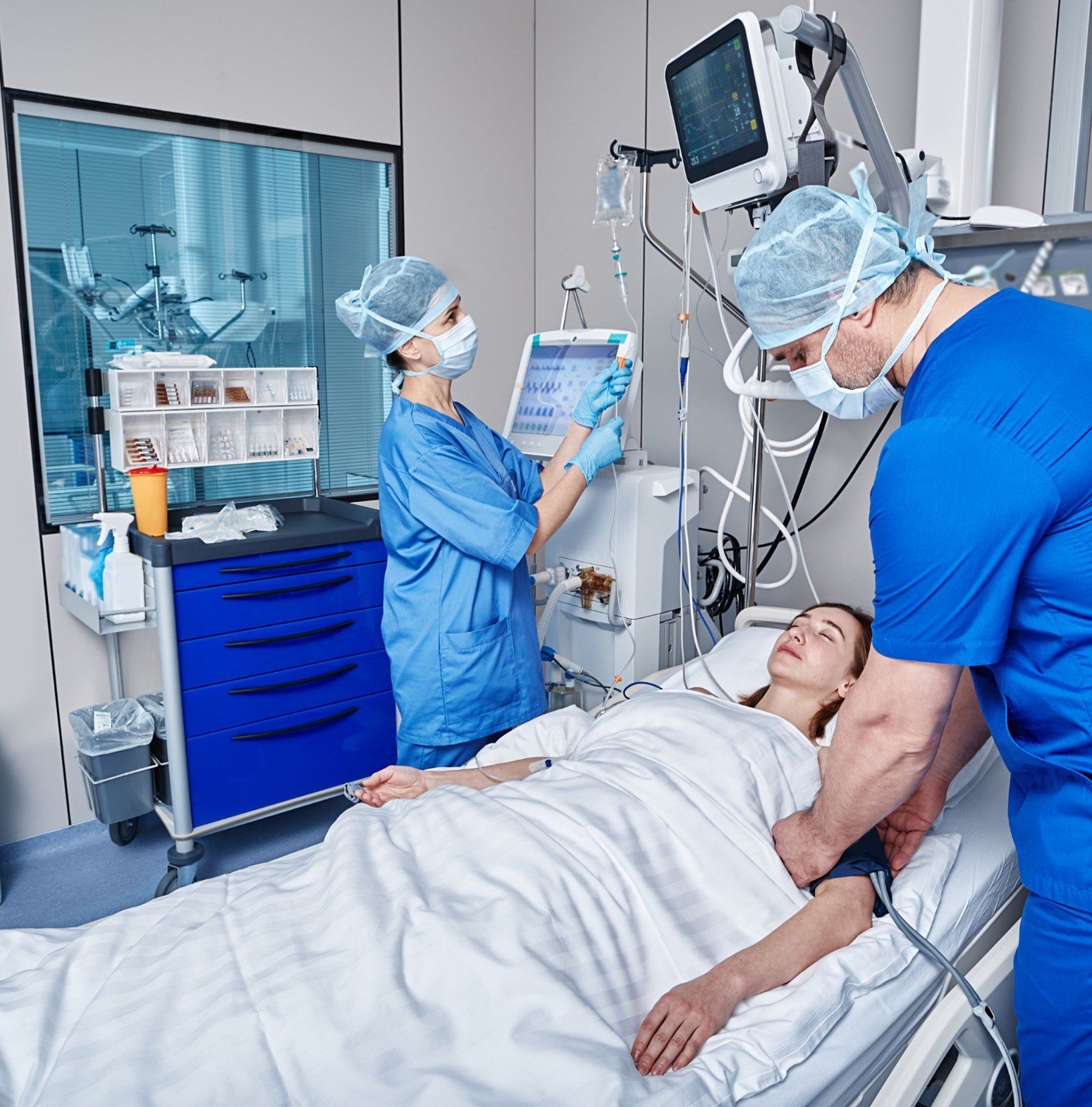
NAHI's dedicated Critical Care & Technology simulation facility highlights ICU procedures, patient monitoring, vital-sign assessment, oxygen administration, basic emergency care, infection prevention, clinical communication and hospital safety protocols.
Critical Care Simulation Training
Practical drills in dedicated lab facilities before clinical hospital rotations.
Patient Monitoring Practice
Continuous vital-sign assessment, ECG rhythm awareness, and recording.
Emergency & Trauma Skills
First aid fundamentals, triage orientation, and coordinated emergency assistance.
Critical-Care Equipment Orientation
Hands-on orientation to multipara monitors, oxygen devices and ICU support apparatus.
Infection Prevention & Safety
Rigorous training in biomedical waste protocols, sterile handling, and aseptic discipline.
Smart Classroom Learning
Interactive digital lectures, multimedia medical emergency demonstrations, and case studies.
Hospital Clinical Exposure
Supervised clinical rotations across ICUs, emergency rooms and trauma care units.
Career & Placement Guidance
Structured resume preparation, soft-skill development, and interview support.
DCCM Course Eligibility
Candidates who have completed Higher Secondary (10+2) or an equivalent examination from Arts, Commerce or Science may apply, subject to NAHI course requirements and original document verification.
Academic Qualification: Higher Secondary (10+2) or equivalent examination from any recognized Council or Board (WBCHSE, CBSE, ICSE, NIOS, or State Boards).
Subject Stream: Arts, Commerce or Science stream as specified in the curriculum, subject to current NAHI admission rules.
Document Verification: Original 10th & 12th marksheets, admit cards, and valid identity proof are mandatory before final seat allotment.
Age & Aptitude: Minimum 17 years recommended with genuine interest in patient care, emergency protocols, and critical-care assistance.
Result-Awaiting Candidates: Students appearing for final 10+2 exams or awaiting results can contact the Admission Office for provisional registration.
DCCM Course Duration & Structure
The DCCM programme consists of two academic years followed by a mandatory six-month supervised clinical internship in accredited hospital critical-care units.
| Stage | Training Focus & Clinical Scope |
|---|---|
| Year 1 | Communication and computer fundamentals, human body, microorganisms and psychiatric disease, fundamentals of nursing, first aid & emergency techniques, plus 4 practical papers (AHE041-01 to 08). |
| Year 2 | Specialized Critical Care Management, Trauma Care Management, Casualty Management, and 3 progressive advanced practical papers (AHE041-09 to 14). |
| 6M Internship | Supervised hospital rotations across ICUs, emergency departments, trauma centres, resuscitation bays and critical-care units. |
Training Mode: Classroom theory, practical simulation drills, audiovisual medical discussions, and direct hospital clinical internship.
Assessment Structure: Periodic examinations, clinical viva voce, logbook maintenance, and practical procedures assessment.
DCCM Course Fees & Transparency
NAHI maintains fee transparency for all allied health programmes. Course fees are structured per academic session and include tuition, laboratory access, and clinical instruction charges:
Transparent & Affordable Tuition
Covers academic instruction, course materials, classroom multimedia, and mentoring by experienced critical-care educators.
All-Inclusive Lab & Simulation Access
Includes access to dedicated simulation manikins, multipara monitors, oxygen apparatus, suction units, and medical consumables.
Flexible Semester Installments
Tuition fees can be divided into structured, manageable semester or term-based installments to ease family budgeting.
Request Current Session Fee Schedule
Get the detailed breakdown of admission fees, semester tuition, lab charges, and hostel accommodation options for Session 2026-27.
DCCM Admission Process at NAHI
Admission to DCCM is direct, merit-conscious and counselling-guided. Follow these 7 straightforward steps:
- 1 Course Selection: Choose DCCM according to your interests and career goals in emergency healthcare.
- 2 Check Eligibility: Review the DCCM academic requirements (10+2 Any Stream).
- 3 Submit Application / Online Enquiry: Apply via our online enquiry form or visit the NAHI campus in College Para, Siliguri.
- 4 Document Verification: Submit 10th and 12th certificates, marksheets, and government ID proof for verification.
- 5 Admission Counselling: Meet with faculty advisors to discuss ICU workflows, clinical rotations, and placement pathways.
- 6 Fee Formalities: Complete prescribed admission payments and receive official enrolment documentation.
- 7 Orientation & Classes: Attend induction, simulation lab orientation, and commence classroom training.
Approved Academic Curriculum
DCCM Course Syllabus (AHE041)
The DCCM curriculum is organized into foundation healthcare subjects in Year 1, specialized critical-care subjects in Year 2, practical papers and a six-month supervised clinical internship.
First Year Curriculum
Foundation Medical Sciences, Nursing Fundamentals & Emergency Care
| Subject Code | Subject Name |
|---|---|
| AHE041-01 | Communicative English and Computer Fundamentals |
| AHE041-02 | Study of the Human Body, Microorganism & Psychiatric Disease |
| AHE041-03 | Fundamentals of Nursing |
| AHE041-04 | First Aid & Emergency Techniques |
| AHE041-05 | Practical – I |
| AHE041-06 | Practical – II |
| AHE041-07 | Practical – III |
| AHE041-08 | Practical – IV |
Second Year Curriculum
Critical Care, Trauma Management & Casualty Operations
| Subject Code | Subject Name |
|---|---|
| AHE041-09 | Critical Care Management |
| AHE041-10 | Trauma Care Management |
| AHE041-11 | Casualty Management |
| AHE041-12 | Practical – V |
| AHE041-13 | Practical – VI |
| AHE041-14 | Practical – VII |
Core Knowledge & Competencies Acquired:
DCCM Practical & Simulation Training
Learn by Doing. Build Critical-Care Confidence. At NAHI Siliguri, students develop practical readiness for high-acuity healthcare settings inside our dedicated Critical Care & Simulation facility:
- • Vital sign assessment (Blood Pressure, Heart Rate, Pulse Oximetry, Body Temperature, Respiratory Rate).
- • Continuous patient monitoring, multiparameter lead attachments, and alarm response awareness.
- • Oxygen administration devices (nasal cannulas, simple face masks, non-rebreather masks, and humidifiers).
- • Assisting with emergency airway suctioning, catheter preparation, and bag-valve-mask (Ambu bag) ventilation.
- • First aid procedures, severe bleeding control, tourniquet application, splinting, and burn dressings.
- • Infection control procedures, personal protective equipment (PPE) donning and doffing, and sterile field maintenance.
- • Crash-cart layout verification, defibrillator pad placement orientation, and emergency trolley inventory checks.
Safety Note: Practical sessions are supervised by appropriately qualified clinical educators, with students working strictly within permitted institutional training scopes.
Smart Classroom & Digital Learning
NAHI integrates audio-visual smart classrooms and digital medical learning tools to teach critical-care pathophysiology, emergency case analysis, and clinical workflows:
Technology-Enabled Classroom Teaching
Smart classroom teaching with digital projectors, 3D anatomical projections, and visual demonstrations.
Multimedia Emergency Medical Education
High-resolution video analyses covering clinical emergencies, cardiopulmonary resuscitation, and trauma protocols.
Case-Based Critical-Care Reviews
Interactive discussions on sepsis, acute respiratory distress, cardiac emergencies, and polytrauma cases.
Digital Health Documentation Practice
Orientation to modern Electronic Medical Records (EMR), ICU flowsheets, and vital monitoring data systems.
Hospital Exposure
Hospital & Clinical Internship
The DCCM programme includes a mandatory 6-month supervised clinical internship in accredited hospital critical-care units, intensive-care departments, and emergency trauma facilities.
Intensive Care Units (ICU)
Continuous monitoring of critically ill patients, central-line care assistance, and patient positioning for bedridden individuals.
Emergency & Casualty Bays
Immediate intake support, triage assistance, emergency equipment readiness, and rapid vital parameters assessment.
Trauma Care Centres
Spinal immobilization support, cervical collar positioning, wound management assistance, and coordinated trauma resuscitation.
Ventilator & Respiratory Areas
Observational ventilator circuit check assistance, humidification maintenance, and endotracheal suctioning support under supervision.
Coronary Care Units (CCU)
Electrocardiogram (ECG) monitor tracing observations, acute chest pain protocol assistance, and cardiac telemetry observation.
Infection Control & Isolation
Strict barrier nursing assistance, hospital-acquired infection (HAI) prevention protocols, and aseptic waste disposal management.
*Clinical internship postings are coordinated subject to active institutional arrangements, clinical logbook maintenance, and student eligibility.
View Internship DetailsScholarship and Financial Assistance
Northern Allied Health Institute believes financial limitations should never deter a dedicated student from pursuing healthcare education. Eligible candidates may access:
Merit-Based Opportunities
Institutional merit concessions for students demonstrating exceptional academic performance in 10+2 examinations.
Government Scholarship Guidance
Administrative guidance on applying for state and central minority/welfare schemes (SC, ST, OBC, Minority, and EWS).
Flexible Instalment Support
Tailored term-based payment plans to help families manage educational costs comfortably.
Scholarship availability is subject to verification of supporting documentation and government/institutional guidelines. Contact our admission desk for details.
Skills Developed Through DCCM
Through continuous laboratory practice and hospital internship, students build essential technical and clinical discipline:
Higher Education & Professional Growth
Eligible DCCM graduates may explore relevant undergraduate allied-health programmes such as B.Sc. in Critical Care Technology, emergency care diplomas, and advanced clinical certifications.
Career Opportunities After DCCM
Expanding hospital systems and emergency departments in North Bengal, Sikkim, and across India offer strong demand for trained critical-care support staff:
Critical Care Technician
Assisting in patient care and equipment handling in ICUs.
ICU Technician
Managing patient monitoring devices and bedside hygiene.
Emergency Care Technician
Supporting casualty intake and acute emergency stabilization.
Trauma Care Assistant
Assisting emergency trauma teams with splinting and immobilization.
Casualty Technician
Managing crash-cart readiness and casualty department workflows.
Patient Monitoring Tech
Observing continuous telemetry and cardiac monitor traces.
Critical Care Unit Exec
Coordinating ICU inventory, biomedical supplies, and records.
Emergency Support Staff
Ambulance and mobile healthcare support roles.
100% Placement Assistance Cell at NAHI
Our dedicated placement cell coordinates hospital interview drives, CV writing workshops, and clinical interview coaching to connect graduates with reputable healthcare providers across North Bengal, Sikkim, and the Northeast.
Who Should Choose DCCM?
The Diploma in Critical Care Management is ideal for:
- ✓ Students interested in critical care, ICU workflows, and emergency healthcare environments.
- ✓ Students who enjoy practical, technical and detail-oriented clinical teamwork.
- ✓ Students interested in patient monitoring technology and critical-care equipment handling.
- ✓ Students wanting exposure to emergency, trauma care and casualty department protocols.
- ✓ Students who can work responsibly and calmly under pressure as part of a multidisciplinary team.
Why Choose NAHI for DCCM?
Northern Allied Health Institute in Siliguri stands out for:
Common Enquiries
Frequently Asked Questions About DCCM
Find verified answers to common student queries regarding DCCM admission, syllabus, eligibility, fees, internship, and career scope at NAHI Siliguri.
What is DCCM?
What is the DCCM course code at NAHI?
What is the duration of the DCCM course?
What is the eligibility for DCCM?
Is Science compulsory for DCCM?
Does DCCM include practical training?
Where does the DCCM internship take place?
What skills are taught in DCCM?
Does NAHI provide critical-care practical training?
What are the career opportunities after DCCM?
Can DCCM graduates work in hospitals?
Can DCCM graduates work in ICUs?
Does DCCM include ventilator-related learning?
Does DCCM include infection-control training?
Does DCCM include emergency and trauma care?
What is taught in the Critical Care Management subject?
What is Casualty Management?
What is the DCCM fee?
Does NAHI provide placement assistance?
How can I apply for DCCM admission at NAHI?
Can I pursue higher education after DCCM?
Is DCCM the same as B.Sc. Critical Care Technology?
Does DCCM make a student a doctor or intensivist?
Does DCCM guarantee a hospital job?
Have more questions? Browse our full General FAQ Section or reach out directly to our counsellors.
Apply for DCCM Admission in Siliguri
Ready to build a meaningful career in intensive care and emergency response? Join the Diploma in Critical Care Management at Northern Allied Health Institute (NAHI).
Campus: Near 1st Gate of Siliguri College, College Para, Siliguri, West Bengal – 734001
Explore Other Paramedical Diploma Courses at NAHI
Diploma in Medical Laboratory Technology (DMLT)
Clinical biochemistry, haematology, microbiology & pathology lab training.
AHE005 • 2Y + 6MDiploma in Operation Theatre Technology (DOTT)
Surgical assisting, anaesthesia equipment, sterilization & perioperative care.
AHE078 • 2Y + 6MDiploma in X-Ray & Imaging Technology
Radiography positioning, digital CR/DR, C-Arm fluoroscopy & radiation safety.
AHS003 • 2Y + 6MDiploma in Physiotherapy & Activity Therapy (DPAT)
Electrotherapy, musculoskeletal rehabilitation, exercise therapy & clinical posting.
AHS001 • 2 YearsDiploma in Patient Care (DPC)
Comprehensive inpatient nursing assistance, bedside care & hospital protocols.
AHE074 • 1 YearDiploma in ECG Technician
12-lead ECG recording, Holter monitoring, stress testing & cardiac diagnostic support.